Welcome to the world of Search

The World of Search, the online home of Richard George, SEO expert and digital marketing strategist and consultant.


I'm a dedicated digital marketing leader and SEO expert with almost three decades of experience navigating the ever-evolving landscape of organic search. As a Board-level Managing Partner at Wavemaker UK, a leading WPP media agency, I bring a wealth of practical knowledge and strategic insight to this platform.


This website, theworldofsearch.com, is my personal space to share my thoughts, views, and proven approaches to the latest changes across the UK search and digital marketing landscape. Here, you'll find expert knowledge and actionable insights from myself and occasional guest authors, all designed to help you succeed online.


Whether you're a UK business owner aiming to boost your online visibility, a seasoned digital marketer seeking cutting-edge SEO strategies for Google's algorithm updates, or just beginning your journey into the complexities of search engine optimisation, this blog is your essential resource.


Dive into in-depth analyses, practical tips, and strategic advice covering everything from technical SEO audits and content marketing best practices to international SEO consulting and the transformative impact of AI in search. My goal is to help you understand and conquer the challenges of the multi-modal search world, ensuring your digital marketing goals are not just met, but exceeded.


Explore my articles, learn from my 25+ years of industry experience, or reach out to me directly for a conversation. Let's discuss how to stay informed, stay ahead, and truly master the world of search.


Rich

Digital & SEO news

By Richard George December 5, 2025
November has not seen significant updates or changes, more reinforcing principles we should all be adopting. While we didn't get an official "core update" from Google, what many of us are calling the "Movember" update, told a different story. As I've been analysing these changes, a clear theme has emerged, and in my opinion, it's one that signals a fundamental shift in how we need to approach our work. The New Normal: AI in Search and Constant Flux For a while now, I've believed that we're moving away from periodic, named updates to a state of continuous adjustment, and November's volatility seems to confirm this. In my view, this is the new normal. We can no longer afford to be reactive. Instead, we have to ensure our strategies are built on a solid foundation that can withstand these changes, but again, thats nothing new. A huge part of this new landscape is the expansion of AI Overviews. I've noticed them appearing for more and more queries, and this is where our conversations about Generative Engine Optimisation (GEO/GSO) become critical. The fact is, getting a user to click through to our site is becoming harder. The not so new goal, in my opinion, is to have our content featured within these AI-powered answers. This requires us to create content that is not only human-friendly but also "AI-friendly." We need to structure our articles with clear, concise, and well-structured information, using the "content chunking" techniques I researched earlier, so that LLMs can easily digest and repurpose our insights. Google Pushes for Higher Quality Content Another trend that I saw accelerate this month is Google's crackdown on scaled and low-quality content. I think this is one of the most positive developments for the web in a long time. For years, the internet has been flooded with repetitive, thin content created purely to game the system. Google is now clearly rewarding websites that provide genuine value. This brings me to what I consider the cornerstone of modern SEO: E-E-A-T (Experience, Expertise, Authoritativeness, and Trustworthiness). In my opinion, E-E-A-T is no longer just a guideline; it's a mandate. Google is getting incredibly sophisticated at identifying signals of credibility. Are your articles written by genuine experts? Is your brand a trusted entity in its field? This isn't something you can fake. It requires a long-term commitment to building your brand's authority, showcasing expertise through detailed author bios and case studies, and ensuring every piece of content you publish is accurate and trustworthy. Google's Giving Us the Tools to Build Authority While the bar is getting higher, I've been encouraged to see that Google is also providing us with better tools. The new "Query Groups" feature in Google Search Console is a perfect example. I see this as a powerful tool for implementing an entity-based SEO strategy. It allows us to move beyond a narrow keyword focus and understand the broader topics and user intents our audience has. In my opinion, this feature is a roadmap. It helps us identify content gaps and build out comprehensive "content clusters" that cover a topic in depth. By doing so, we're not just optimising a page; we're establishing our website as a topical authority—a mini-knowledge graph in our niche—which is one of the strongest positive signals we can send to Google. My Final Thoughts Looking back at November, my key takeaway is this: success in SEO now requires a holistic and strategic approach. We must be committed to quality, build a strong and trustworthy brand reputation, and adapt our content to be valuable for both humans and AI. Once again this is not something new but at times we just need to remind the industry.

By Richard George November 28, 2025
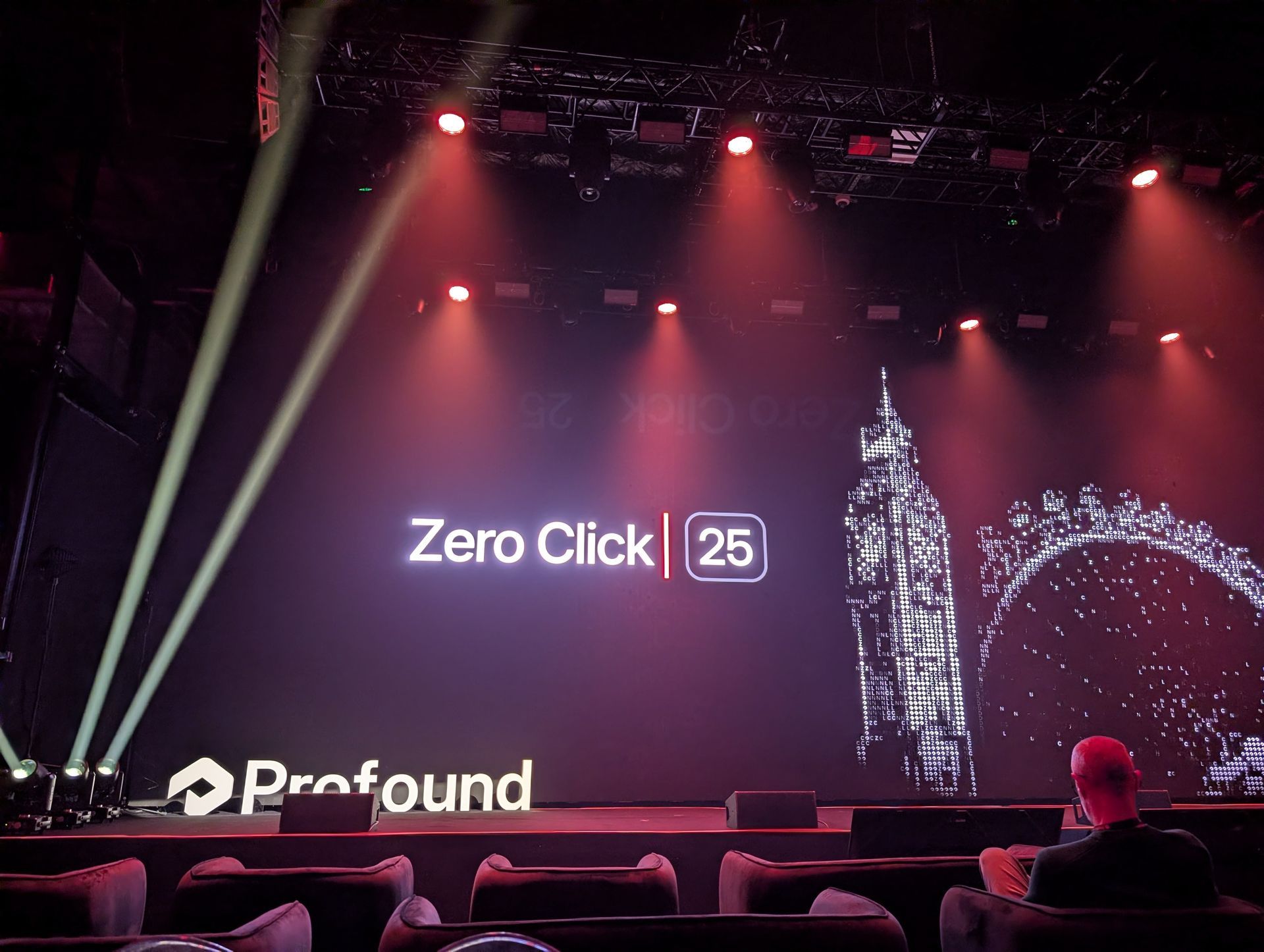
I recently attended Profound’s "Zero Click London" event, to gain a greater understand, listen and learn more on the current revolution in AI search. The central theme was a seismic shift in the digital landscape, a change so fundamental that it requires us to rip up the old marketing and PR playbooks. For two decades, the deal was simple: we create content, Google sends traffic, and we convert visitors. That ecosystem is now being replaced. We have entered the age of AI search, where the winner is not the brand with the most clicks, but the one that provides the first answer. The Death of the Scroll: From Critical Thinking to Anchor Bias The most striking concept of the day came from Jonny Bentwood of Golin: we have moved from an era of "critical thinking to anchor bias." We used to scroll endlessly through pages of blue links, weighing options and making our own decisions. Now, with nearly 60% of searches resulting in zero clicks, users are getting their answers directly from Generative AI. They ask a question, and they get one answer. This isn't search as we know it; it's a decision engine. And consumers are trusting that first answer implicitly. This behavioural shift is the "anchor bias." The first piece of information received becomes the anchor against which all subsequent information is judged. For brands, this is a terrifying and exhilarating prospect. If you're not part of that first answer, you are, for all intents and purposes, invisible. Earned Media Isn't Dead—It's the Fuel for AI So, how does a brand become the source of that coveted first answer? The most powerful and counter-intuitive insight from the event was this: 90% of AI visibility is driven by citations from earned media. AI models are not all-knowing oracles; they are voracious readers that form their answers by synthesizing information from credible sources. This means that the skills of public relations and earned media have never been more critical. However, the sources that matter have changed. The "Tier 1 media list" is no longer just about the major news outlets. It's about the niche, specialist sites that AI has identified as trustworthy for specific topics. For hairdryers, it might be Byrdie and Techradar. For your industry, it will be a different set of publications. The challenge for us as marketers and communicators is to identify and engage with this new "Tier 1 AI list." These are the domains that are shaping the AI's "opinion" and, by extension, your customers' decisions.
By Richard George November 14, 2025
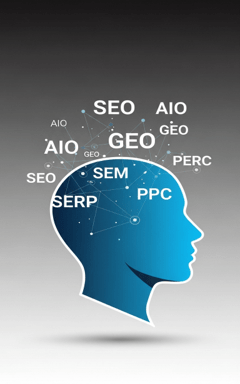
If you work in digital marketing or run a business with an online presence, you've probably noticed a few new buzzwords popping up. Just when we all got comfortable with SEO , suddenly we're hearing about AIO, GEO, AEO, and a whole host of other 'O's. It's easy to feel a bit lost. But don't worry. This explosion of new terms isn't just jargon for the sake of it. It reflects a fundamental and exciting shift in how search engines work and how we find information online. We are moving from a simple list of links to a world of instant answers, AI-generated summaries, and richer user experiences. In this post, I'll break down what each of these key acronyms means, what their goals are, and how they fit into the bigger picture. The SEO Acronyms Explained Let's demystify the alphabet soup of modern search marketing. # **SEO: Search Engine Optimisation** This is the one we all know and love. For years, SEO has been the practice of optimising your website and its content to rank as highly as possible in traditional search engine results pages (like Google and Bing). The primary goal has always been to drive organic clicks to your website from those lists of blue links. Core Focus: Organic rankings and driving traffic to your website. # **AIO, GEO, AEO, and LLMO: The AI & Answer Crew** I'm grouping these together because they are all part of the same fundamental shift towards an AI-driven search landscape. They are less about getting a user to click a link and more about having your content **used** by the search engine itself to provide a direct answer. AIO (AI Optimisation) : This is the broadest term. It refers to a holistic strategy of making your content perfectly readable and understandable for all kinds of AI systems, from ChatGPT to Google's new AI Overviews. The goal is for the AI to trust your content enough to cite it as a source in its generated response. GEO (Generative Engine Optimisation) : This is a more specific version of AIO. It focuses purely on optimising for "generative engines"—the AI that creates the new summary boxes at the top of Google's results (often called AI Overviews or SGE). The aim here is to become a primary source for that AI-synthesised answer. AEO (Answer Engine Optimisation): This has been around for a little longer. It’s the practice of structuring your content to directly answer a specific question. The goal is to win "zero-click" results like the Featured Snippets (the answer boxes that appear above the main results) or to be the source for a voice search answer from Alexa or Google Assistant. LLMO (Large Language Model Optimisation): This is very similar to AIO and GEO. It focuses on the technical aspects of structuring your content so that the underlying technology (the Large Language Model) can easily process, understand, and reference your information with confidence. *Key Difference from Traditional SEO: All these focus on brand visibility and authority *within* the AI-generated answer, rather than just getting a click on a link. # **SXO: Search Experience Optimisation** SXO reminds us that the job isn't done when a user clicks. It combines traditional SEO with User Experience (UX) design. It asks: what happens *after* the click? Is your website fast? Is it easy to navigate? Does the content genuinely solve the user's problem? A poor on-site experience can undo all your hard work getting the click in the first place. Key Difference from Traditional SEO: It extends the focus beyond the search results page to the entire user journey on your website. # **Geo SEO: Geographic Optimisation** This is a specialised form of SEO for businesses that serve a specific physical area. It involves optimising your online presence—particularly your Google Business Profile and local landing pages—to appear for location-based searches like "best pizza near me" or "electrician in Bristol." Key Difference from Traditional SEO: It is hyper-focused on local search visibility within a defined geographic boundary. # **And what about GSO?** You might see **GSO (Generative Search Optimisation)** used, but it's less common and is generally just another name for GEO. Don't let it confuse you! Conclusion: It's All About Providing the Best Answer While it can seem daunting, this new vocabulary points to a clear direction of travel. The future of search is less about technical tricks and more about genuine authority and providing the best, most helpful answer to a user's query. Whether that answer is a link to your website (SEO), part of an AI-generated summary (AIO/GEO), or a great experience on your landing page (SXO), the core principle remains the same: create high-quality, trustworthy content that puts the user first. By doing that, you'll be well-placed to succeed, no matter what acronym comes next.